
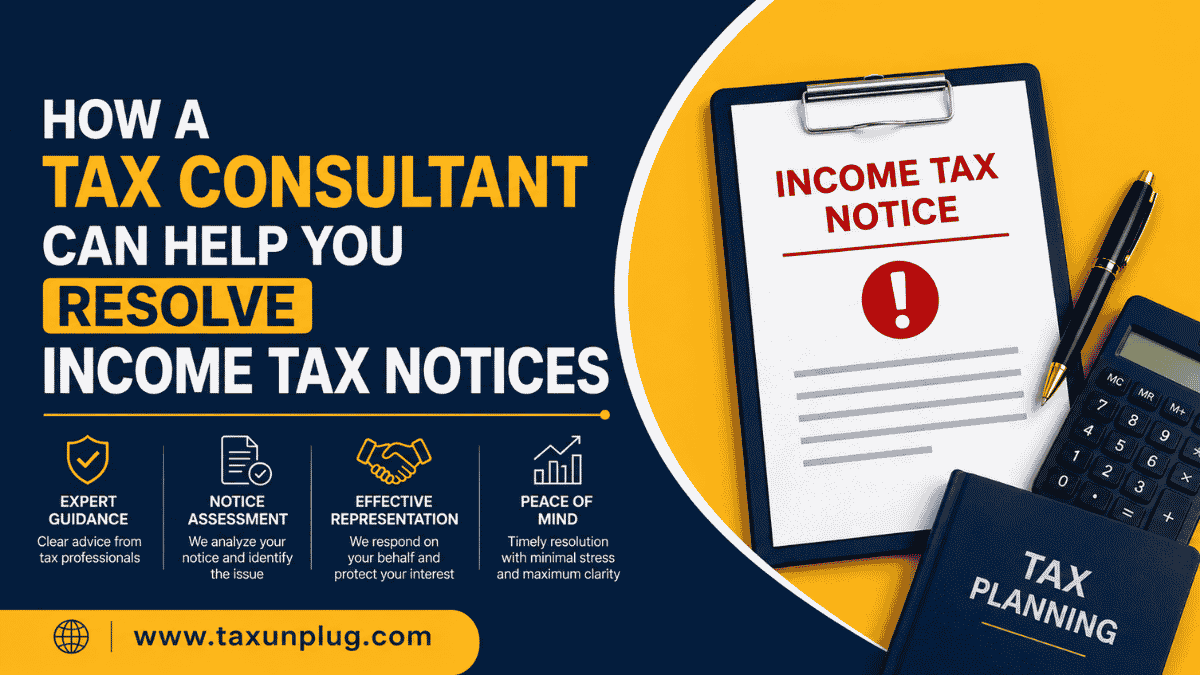

Receiving an income tax notice can be stressful. Many people immediately think they have done something wrong. However, that is not always true.
Sometimes, the Income Tax Department sends notices to ask for additional information, verify transactions, correct errors, or clarify differences in your tax return.
The good news is that you do not have to handle these notices alone. An experienced Tax Consultant can guide you through the entire process, reduce stress, and help you respond correctly within the required deadline.
In this guide, you will learn why income tax notices are issued, how a tax consultant helps, and why professional guidance can save both time and money.
What Is an Income Tax Notice?
An income tax notice is an official communication from the Income Tax Department asking for clarification, additional documents, payment of taxes, or correction of information submitted in your Income Tax Return (ITR).
Receiving a notice does not automatically mean you have committed tax fraud. In many cases, it is simply a request for more information.
Common reasons include:
- Errors in Income Tax Return
- Mismatch in TDS details
- High-value financial transactions
- Unreported income
- Incorrect deductions claimed
- Delay in filing tax returns
- Verification of investments
- Tax demand due to calculation differences
The key is to respond correctly and within the given timeline.
Why You Should Never Ignore an Income Tax Notice
Many taxpayers panic or ignore tax notices, hoping the issue will disappear.
Unfortunately, ignoring a notice can lead to:
- Additional penalties
- Interest charges
- Tax assessment proceedings
- Refund delays
- Legal complications
- Increased scrutiny from the Income Tax Department
Taking quick action always leads to better outcomes.
How a Tax Consultant Helps Resolve Income Tax Notices
1. Understands the Notice Correctly
Income tax notices often contain legal language that can confuse taxpayers.
A qualified Tax Consultant carefully reviews the notice and explains:
- Why the notice was issued
- Which section of the Income Tax Act applies
- What documents are required
- What action needs to be taken
- The response deadline
This helps avoid misunderstandings.
2. Identifies the Root Cause
Instead of simply replying, a consultant investigates why the notice was generated.
They examine:
- Filed tax returns
- Salary details
- Business income
- Bank transactions
- Capital gains
- TDS records
- AIS and Form 26AS
- Investment proofs
Finding the real issue is the first step toward resolving it.
3. Collects and Organizes Required Documents
Responding with incomplete documents may result in further notices.
A tax professional helps gather:
- PAN details
- Aadhaar information
- Income proofs
- Bank statements
- Investment records
- Salary slips
- Business accounts
- Property documents
- Capital gains calculations
Well-organized documentation strengthens your response.
4. Drafts a Professional Reply
Every notice requires a carefully written response.
A Tax Consultant prepares a detailed reply supported by proper documents and legal references where required.
This improves the chances of early resolution.
5. Files the Response Before the Deadline
Missing the response deadline can create additional complications.
Your consultant ensures:
- Timely submission
- Correct online filing
- Proper document uploads
- Accurate information
- Compliance with tax regulations
Timely action protects your interests.
6. Represents You Before Tax Authorities
Some tax matters require further clarification.
A tax consultant can represent you during:
- Tax assessments
- Scrutiny proceedings
- Clarification requests
- Departmental hearings
Professional representation reduces stress and improves communication.
7. Minimizes Tax Liability Legally
Many notices involve calculation differences.
A tax expert reviews whether:
- Tax has already been paid
- TDS is correctly reflected
- Eligible deductions are claimed
- Tax credits are available
This may reduce additional tax demands.
8. Helps Prevent Future Tax Notices
Resolving the current notice is only one part of the job.
A consultant also helps improve future tax compliance through:
- Proper tax planning
- Accurate return filing
- Record maintenance
- Income reporting
- Investment documentation
- Business accounting
This significantly lowers the risk of receiving future notices.
Common Income Tax Notices That Taxpayers Receive
Some commonly issued notices include:
Notice for Return Processing
Verification of filed return details.
Notice for Defective Return
Errors found in the submitted ITR.
Notice for Income Mismatch
Income reported differs from government records.
Scrutiny Notice
Detailed examination of income and deductions.
Demand Notice
Additional tax is payable after assessment.
Reassessment Notice
Income may have escaped assessment in previous years.
Each notice requires a different response strategy.
Benefits of Hiring a Tax Consultant
Working with an experienced professional offers several advantages.
Saves Time
You avoid spending hours understanding complex tax laws.
Reduces Stress
Professional guidance provides confidence throughout the process.
Avoids Costly Mistakes
Incorrect replies may lead to penalties.
Ensures Compliance
Every response follows applicable tax rules.
Better Documentation
Proper evidence increases the chances of successful resolution.
Personalized Advice
Every taxpayer’s financial situation is different.
Who Should Consult a Tax Expert?
Professional assistance is especially useful for:
- Salaried employees
- Business owners
- Freelancers
- Consultants
- Startups
- NRIs
- Investors
- High-net-worth individuals
- Property buyers and sellers
- Individuals with multiple income sources
Tips to Avoid Future Income Tax Notices
You can reduce the chances of receiving notices by following good tax practices.
- File Income Tax Returns on time.
- Report every source of income.
- Verify Form 26AS before filing.
- Check AIS and TIS carefully.
- Keep investment proofs safely.
- Maintain proper financial records.
- Match TDS details correctly.
- Avoid incorrect deduction claims.
- Respond quickly to tax communications.
- Consult a tax professional before filing.
Why Professional Tax Guidance Matters
Tax laws continue to evolve every year.
Keeping track of new rules, filing requirements, deductions, and compliance obligations can be difficult for most individuals and businesses.
An experienced Tax Consultant stays updated with the latest tax regulations and helps ensure that every response is accurate, legally compliant, and submitted on time. Their expertise not only helps resolve current tax notices but also builds a stronger tax compliance strategy for the future.
Seeking professional advice early often prevents small issues from becoming major financial or legal problems.
Key Takeaways
- Income tax notices are common and should not cause immediate panic.
- Always read the notice carefully and respond within the deadline.
- Professional guidance improves the quality of your response.
- Proper documentation plays a vital role in resolving tax matters.
- A qualified tax consultant can help reduce errors, penalties, and unnecessary stress.
- Good tax planning helps prevent future notices.
Conclusion
Receiving an income tax notice does not necessarily mean something is seriously wrong. In many cases, it is simply an opportunity to clarify information or correct minor discrepancies.
The most important step is to respond promptly and accurately. With the support of an experienced Tax Consultant, you can understand the notice, prepare the right documents, communicate effectively with the Income Tax Department, and resolve the issue with confidence.
Professional tax guidance not only helps you handle today’s notice but also strengthens your financial compliance for the future.
Received an Income Tax Notice? Don’t Panic—Talk to TaxUnplug Today!
Whether you’re an individual taxpayer, freelancer, business owner, NRI, or investor, the experts at TaxUnplug are here to help. Our experienced tax professionals will review your notice, prepare an accurate response, and guide you through every step of the resolution process.
Contact TaxUnplug today for reliable, timely, and professional tax assistance—so you can resolve your tax concerns with confidence.
Frequently Asked Questions (FAQs)
1. Is receiving an income tax notice a serious problem?
Not always. Many notices are routine requests for clarification or additional information. The important thing is to read the notice carefully and respond before the deadline.
2. Can I respond to an income tax notice myself?
Yes, you can. However, if the notice is complex or involves large financial transactions, professional assistance helps avoid mistakes and ensures compliance.
3. How can a Tax Consultant help with an income tax notice?
A tax consultant reviews the notice, identifies the issue, prepares the required documents, drafts an appropriate response, and helps you submit it correctly within the specified timeline.
4. What documents are usually required to respond to a tax notice?
Depending on the notice, you may need Income Tax Returns, PAN, Aadhaar, bank statements, salary slips, investment proofs, Form 26AS, AIS, TDS certificates, and other supporting documents.
5. What happens if I ignore an income tax notice?
Ignoring a notice may result in penalties, interest, delayed refunds, additional tax demands, or further legal proceedings. Responding promptly is always recommended.
6. How can I avoid receiving income tax notices in the future?
File your Income Tax Return on time, report all income accurately, verify your tax records before filing, maintain proper documentation, and consult a qualified tax professional whenever needed.